 Abhilash John
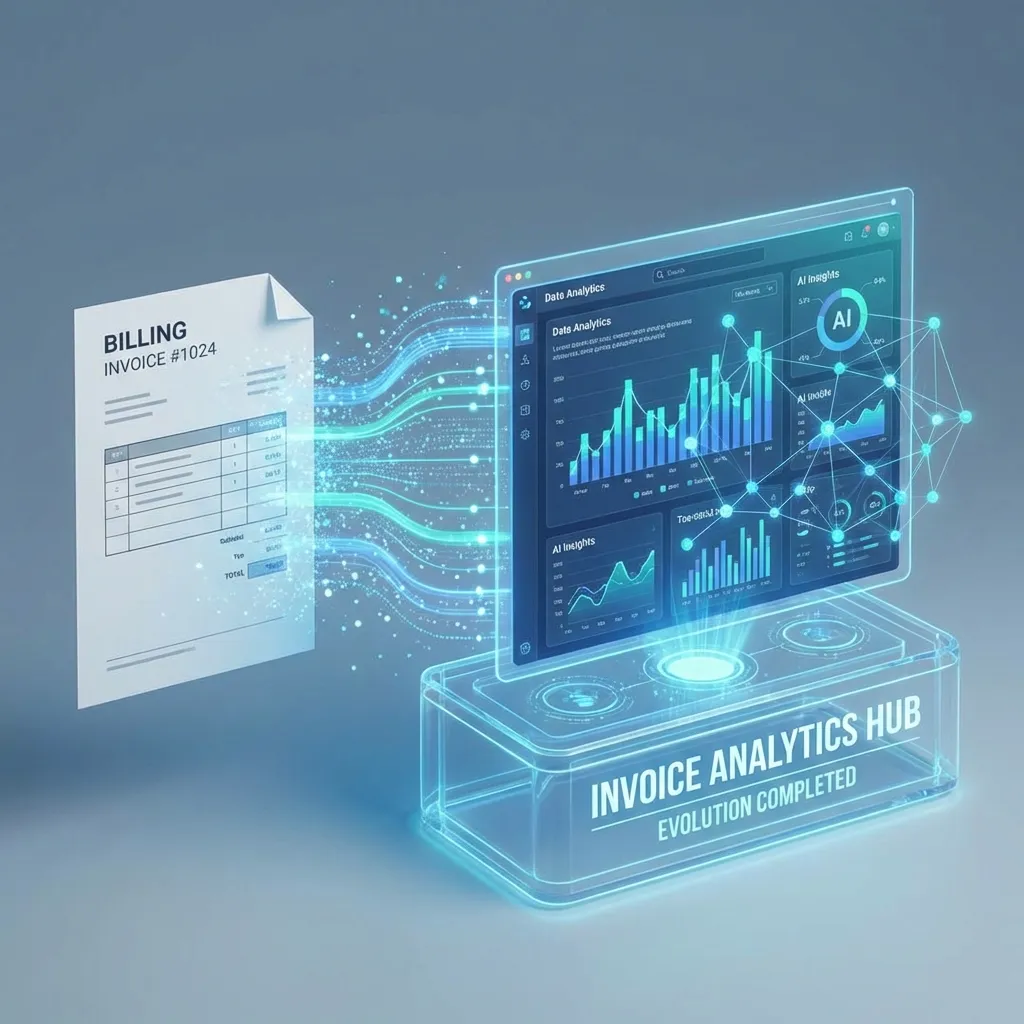
 The Inevitable Evolution: Why Every Usage-Based Billing Tool Will Become a Product Analytics Platform
How Usage Metering Infrastructure Is Transforming Into the Central Nervous System of Modern SaaS and What It Means for Your Business
Table of Contents:
- The Convergence No One Saw Coming
- Why Usage-Based Billing Tools Must Evolve Into Analytics Platforms
- The Compounding Power of Usage Data Plus Clickstream Analytics
- Drawing the Line: Where Billing Ends and Pure Analytics Begins
- The Pricing Model Paradox: Why Event-Based Billing Must Die
- What This Means for Businesses Orchestrating UBB Tools
- Technical Considerations: Building Data Pipelines for the New Reality
- The Human Element: Organizational Politics and Data Team Dynamics
- Strategic Recommendations
- Conclusion: The Future of Billing Is Intelligence
The Convergence No One Saw Coming
In 2025, something remarkable is happening in the SaaS infrastructure landscape. Usage-based billing tools originally built to track consumption and generate invoices are quietly becoming the most powerful product analytics platforms in modern organizations. This isn’t a feature add-on or a marketing pivot. It’s an inevitable convergence driven by fundamental forces that are reshaping how software companies understand, price, and grow their products.
The numbers tell the story. According to recent industry analysis, 67% of SaaS companies now leverage usage-based pricing models, up from 52% in 2022. The usage-based billing software market reached $6.4 billion in 2024 and is projected to hit $11.5 billion by 2032. But here’s what’s more interesting: the companies building billing infrastructure aren’t just processing invoices anymore. They’re sitting on behavioral data goldmines that rival and often surpass traditional product analytics platforms in depth, accuracy, and business relevance.
If you’re implementing a usage-based billing system today, you’re not just choosing an invoicing tool. You’re selecting what will become the central data intelligence platform for your entire go-to-market organization. The question is no longer whether billing tools will evolve into analytics platforms, but how quickly and whether your organization is ready for the transformation.
Why Usage-Based Billing Tools Must Evolve Into Analytics Platforms
The Data Is Already There and It’s Better Than You Think
Traditional product analytics tools like Mixpanel, Amplitude, or Heap require careful instrumentation. Engineering teams must decide which events to track, implement SDK integrations, manage sampling, and constantly maintain tracking as products evolve. Despite best efforts, coverage is never complete. Important events get missed. Integration delays mean gaps in historical data. Sampling means you’re making decisions on statistical approximations, not ground truth.
Usage-based billing systems face no such limitations. Accurate billing demands exhaustive event capture. Every API call that costs you money must be logged. Every compute hour, storage byte, or AI inference must be timestamped and attributed. The billing team won’t accept “approximate” or “sampled” data revenue is at stake. This creates a unique advantage: UBB tools achieve 100% coverage of monetized features from day one, with zero implementation lag.
Consider what a modern usage metering system captures for each billable event:
- Precise timestamp with millisecond accuracy
- User and account identifiers with full organizational hierarchy
- Feature or resource consumed with granular categorization
- Consumption amount with exact measurement units
- Pricing tier context including plan, commitment level, and discounts
- Geographic and regulatory metadata for compliance and localization
- Infrastructure context such as region, availability zone, or service endpoint
- Session and request metadata linking to broader interaction patterns
This isn’t logging for the sake of logging it’s operational necessity. But aggregate this data across millions of events and thousands of customers, and you have a complete behavioral dataset that answers questions traditional analytics tools struggle with.
The Context Gap That Product Analytics Can’t Fill
Product analytics platforms excel at tracking clicks, page views, and user flows. They can tell you that Feature X has high engagement or that users who complete Onboarding Flow Y have better retention. But they fundamentally struggle with one critical question: How does product behavior translate to revenue?
This is where usage-based billing data creates transformative context. A billing system doesn’t just know that a user accessed a feature it knows:
- Which features drive the most revenue per user across different customer segments
- Which usage patterns predict expansion versus churn with 30, 60, and 90-day lead indicators
- The exact moment customers cross pricing thresholds that trigger plan changes or overage charges
- How feature adoption correlates with lifetime value at the individual feature level
- Which customer cohorts have the highest revenue growth rates and what behaviors distinguish them
- The revenue impact of product changes measured in actual dollars, not proxy metrics
Traditional product analytics might tell you that power users engage with Feature X three times more than typical users. Your billing system tells you that Feature X accounts for 40% of consumption-based revenue, users who adopt it expand by 2.3x within 90 days, and the median time from first use to pricing tier upgrade is 47 days.
One informs product decisions. The other informs business strategy.
The Rise of Consumption-Based Business Models Changes Everything
The shift from seat-based to consumption-based pricing isn’t a temporary trend it’s structural transformation. Companies like Snowflake, Databricks, Stripe, Twilio, AWS, and OpenAI have proven that customers prefer paying for actual value delivered. This model is now spreading beyond cloud infrastructure into B2B SaaS, developer tools, AI platforms, fintech services, and beyond.
As consumption-based pricing becomes dominant, the systems that track usage evolve from necessary cost centers to strategic revenue engines. The billing infrastructure becomes the source of truth for:
- Product-market fit signals revealed through natural consumption patterns
- Expansion revenue opportunities identified through usage trend analysis
- Customer health scores based on actual product value realization
- Pricing optimization insights derived from real willingness-to-pay data
- Feature prioritization guidance weighted by revenue impact, not just engagement
- Sales qualification signals showing which prospects will become valuable customers
According to Lightspeed Venture Partners’ recent analysis of the billing infrastructure landscape, “In a usage-based model, the most accurate and up-to-date source of customer value isn’t a static contract in a CRM it’s real-time product usage data. As such, the billing infrastructure becomes the data observability layer for the broader organization.”
Competitive Pressure and Customer Demand Accelerate the Evolution
Vendors in the usage metering and billing space face mounting competitive pressure to differentiate beyond basic invoice generation. Building analytics capabilities on existing usage data is the natural strategic move:
- Low marginal cost: The infrastructure to ingest and store events already exists; adding analysis layers is primarily a software development investment
- High customer value: Unified billing and analytics solves genuine pain points around data fragmentation and metric inconsistency
- Strong competitive moat: Deeply integrated data platforms win against best-of-breed point solutions that require complex data orchestration
- Natural upsell motion: Analytics becomes a premium tier above basic billing, creating expansion revenue
Meanwhile, customers increasingly demand consolidated platforms. Finance wants billing accuracy and revenue recognition. Product teams want usage insights and feature analytics. Engineering needs API observability and cost attribution. Sales wants expansion signals and customer health metrics. RevOps needs unified metrics across the entire customer lifecycle.
A single usage-based billing platform that serves all these constituencies wins. This isn’t theoretical it’s already happening. Modern platforms like Flexprice, m3ter, Lago, and others are rapidly expanding from pure billing into comprehensive usage analytics, while traditional analytics vendors struggle to add the billing rigor required for financial operations.
The Compounding Power of Usage Data Plus Clickstream Analytics
When Billing Data Meets Behavioral Data, Magic Happens
Here’s where the transformation becomes exponential. When usage-based billing data converges with clickstream and web analytics data, you unlock insights impossible to achieve with either dataset alone.
Imagine your billing system ingests not just API calls and compute hours, but also:
- In-app navigation patterns showing how users discover and adopt features
- UI interaction sequences revealing friction points in the user experience
- Session duration and frequency indicating engagement depth and habit formation
- Feature discovery flows demonstrating how users learn about capabilities
- Onboarding completion metrics predicting long-term usage patterns
- Help documentation access signaling confusion or education gaps
- Support ticket triggers identifying product issues before they escalate
- Collaboration patterns showing team adoption and viral growth within accounts
Now you can answer business-critical questions that drive revenue outcomes:
Revenue Attribution Questions:
- Which acquisition channels produce users with the highest consumption rates and fastest time-to-value?
- What onboarding flows correlate with 3-month revenue that’s 2x higher than baseline?
- Do users who watch tutorial videos have different consumption patterns than those who don’t?
- Which marketing campaigns attract customers who expand versus those who churn?
Product Development Questions:
- Which UI paths lead to API adoption rates 40% above average?
- What in-app behaviors predict a customer will hit their pricing tier limit within 30 days?
- Which features have high engagement but low monetization and should pricing change?
- Where do users abandon feature adoption flows, leaving revenue on the table?
Customer Success Questions:
- What usage decline patterns predict churn 60 days in advance with 80%+ accuracy?
- Which early behaviors distinguish customers who will expand by 5x from those who won’t?
- When should customer success intervene based on consumption trends and in-app behavior?
- What product usage combinations indicate an account is ready for enterprise pricing?
Sales and Growth Questions:
- Which product-qualified leads (PQLs) will convert to paid customers within 14 days?
- What free tier usage patterns justify premium sales team engagement?
- Which accounts show buying signals based on team expansion and feature exploration?
- How does in-product behavior during trials predict deal size and win rate?
Real-World Impact: The Data Tells a Story
Consider a hypothetical B2B SaaS company with usage-based billing. Their pure billing data shows Customer A consumes 1,000 API calls per month and pays $500. Customer B consumes 1,200 API calls and pays $600. From a billing perspective, Customer B looks slightly better.
Now add clickstream data. Customer A’s team of 15 users actively explores advanced features, watches training videos, and their usage is growing 15% month-over-month. Three departments are using the product. Customer B has one power user making all 1,200 API calls, zero feature exploration, and flat month-over-month usage.
The integrated view reveals Customer A is on track for enterprise expansion while Customer B is a churn risk. This intelligence doesn’t come from billing data alone or clickstream data alone it emerges from the fusion of both.
According to the dbt Labs 2025 State of Analytics Engineering Report, 57% of data professionals spend most of their time maintaining or organizing datasets. The opportunity to unify billing and behavioral data eliminates duplicate instrumentation, reduces data pipeline complexity, and creates a single source of truth that both finance and product teams trust.
The Retention Intelligence Layer: Where Billing Data Meets Behavioral Intervention
The convergence of billing and analytics creates particularly powerful capabilities for retention and user journey orchestration tools—systems designed to bring users back and prevent churn through intelligent, automated interventions. These platforms represent the operational layer that sits on top of converged billing-analytics data, transforming passive insights into active engagement campaigns. When your billing platform detects that Customer A’s API consumption dropped 40% over the past two weeks, and your behavioral analytics shows their team stopped accessing key features while their support ticket volume increased, a user journey orchestration system can automatically trigger personalized re-engagement sequences before churn becomes inevitable. This is why retention capabilities are increasingly becoming extensions of billing infrastructure rather than standalone solutions. The most sophisticated implementations combine usage trend analysis from billing systems with engagement signals from product analytics to create multi-dimensional health scores that predict churn with 60 to 90 days of lead time. They then orchestrate automated interventions across multiple channels targeted email sequences explaining underutilized features, in-app messages highlighting relevant use cases, customer success task assignments for high-touch accounts, personalized product tours re-introducing dormant users to new capabilities, and even dynamic pricing offers to re-engage price-sensitive customers showing signs of reducing consumption. What makes this particularly relevant to the billing analytics convergence is that user journey orchestration works exponentially better when it has access to both revenue data (what the customer pays and how pricing impacts behavior) and engagement data (how they actually use the product). A retention system working only with billing data might identify a customer reducing consumption, but without behavioral context, it cannot distinguish between a customer cutting back strategically versus one experiencing product friction that could be resolved with better onboarding. Conversely, a retention tool with only engagement data might flag a highly engaged user as healthy when in reality they are frustrated power users about to churn because pricing doesn’t match perceived value. The unified view enables precision interventions that actually move retention metrics, which is why companies implementing modern billing platforms should evaluate whether built-in user journey and retention capabilities eliminate the need for separate tools entirely, or at minimum ensure their billing platform provides the rich event streams and customer intelligence that external retention orchestration systems require to be effective.
The Technical Architecture for Convergence
The convergence works because modern data architectures make it feasible. Consider the typical data flow:
Traditional Separated Architecture:
- Product analytics SDK → Analytics vendor’s infrastructure → Analytics data warehouse
- Usage metering SDK → Billing vendor’s infrastructure → Billing data warehouse
- Finance pulls from billing; Product pulls from analytics; RevOps builds brittle integrations
- Metrics conflict; definitions drift; attribution is impossible
Converged Architecture:
- Unified event instrumentation → Central data warehouse or lake (Snowflake, BigQuery, Databricks)
- Billing platform reads consumption events for invoicing and revenue recognition
- Analytics layer reads all events (billable + behavioral) for comprehensive intelligence
- Reverse ETL syncs insights back to operational systems (CRM, customer success platforms, marketing automation)
- Single source of truth; unified metrics; complete attribution models
This architecture isn’t just cleaner it’s more powerful. With tools like dbt, data teams can define metrics once and surface them consistently across billing dashboards, product analytics, executive reporting, and operational workflows. Data governance, privacy controls, and quality checks apply uniformly rather than being reinvented for each tool.
Drawing the Line: Where Billing Ends and Pure Analytics Begins
The Core Question: What Should a Billing Platform Actually Do?
As billing tools expand into analytics, a fundamental question emerges: Where should they draw the line? Should a usage-based billing platform try to replace Amplitude entirely? Should it power marketing attribution models? Should it handle HR analytics because employee usage patterns exist in the data?
The answer requires clear product strategy thinking. Billing platforms succeed when they focus on analytics that directly serve billing, pricing, and revenue operations, not when they try to become everything to everyone.
The Core Billing-Adjacent Analytics That Make Sense
These analytics capabilities feel like natural extensions of billing platforms:
1. Revenue Analytics and Forecasting
- Revenue trend analysis by customer segment, pricing tier, and product line
- Consumption forecasting based on historical patterns and growth trajectories
- Churn prediction models using usage decline as leading indicators
- Expansion opportunity identification through usage threshold monitoring
- Pricing model impact analysis when evaluating tier structures or rate changes
2. Usage Analytics for Pricing Optimization
- Feature-level consumption distribution to inform which capabilities to monetize
- Usage pattern clustering to identify natural pricing tier breakpoints
- Overage analysis to understand where customers exceed included allowances
- Commitment discount effectiveness showing actual utilization versus committed amounts
- Pricing experiment analysis measuring revenue impact of rate or packaging changes
3. Customer Health and Expansion Signals
- Usage-based health scoring combining consumption trends with engagement metrics
- Product-qualified lead identification using free tier or trial consumption patterns
- Upsell timing signals based on approaching usage limits or organic growth patterns
- Seat expansion indicators from collaboration and team adoption behaviors
- Feature adoption tracking tied to premium tier capabilities and add-on modules
4. Operational Billing Intelligence
- Anomaly detection flagging unusual consumption spikes or drops requiring investigation
- Usage attribution accuracy ensuring costs are properly allocated to customers and accounts
- Metering data quality monitoring to catch instrumentation issues before they affect revenue
- Invoice accuracy validation catching discrepancies between logged usage and billed amounts
- Payment failure correlation with usage patterns to identify involuntary churn patterns
What Billing Platforms Should NOT Try to Own
Some analytics capabilities belong in dedicated tools, not billing platforms:
Deep Product Analytics:
- Detailed user flow analysis, funnel optimization, and A/B testing infrastructure
- Retention cohort analysis at granular feature and screen levels
- Session replay and heatmap visualization for UX optimization
- Feature flag management and experimentation frameworks
- Mobile app analytics with crash reporting and performance monitoring
Marketing Attribution and Campaign Analytics:
- Multi-touch attribution modeling across advertising channels and campaigns
- Marketing mix modeling and media spend optimization
- SEO and organic search performance tracking
- Content performance analysis and engagement scoring
- Social media analytics and influencer tracking
Customer Support and Success Operations:
- Ticket management, SLA tracking, and support quality scoring
- Customer satisfaction surveys (CSAT, NPS) and feedback collection
- Knowledge base analytics and self-service content effectiveness
- Community engagement metrics and forum activity tracking
Business Intelligence and Executive Dashboards:
- Cross-functional KPI aggregation pulling from sales, marketing, finance, and operations
- Board-level reporting combining financial, operational, and strategic metrics
- Headcount planning and organizational analytics
- Supplier and vendor performance management
The key principle: Billing platforms should own analytics that inform pricing, packaging, and revenue optimization decisions. They should integrate deeply with but not replace specialized analytics tools that serve other organizational functions.
The Integration Strategy: Best of Both Worlds
Rather than trying to replace product analytics entirely, sophisticated billing platforms pursue an integration strategy:
- Bidirectional data flows: Usage metering data flows into product analytics tools for comprehensive analysis; engagement signals flow back into billing systems to enrich customer health scores
- Shared semantic layer: Unified metric definitions across billing and analytics ensure consistent reporting and prevent the metric conflict that plagues fragmented data stacks
- API-first architecture: Clean APIs allow product, engineering, and data teams to access usage data without vendor lock-in or proprietary query languages
- Embedded analytics: Billing platforms provide ready-made dashboards and reports for revenue-focused use cases while allowing data teams to build custom analyses in their preferred BI tools
This approach maximizes value. Finance gets billing accuracy and revenue forecasting from the billing platform. Product teams get deep behavioral insights from dedicated analytics tools. Both operate on consistent data, and critical metrics like customer lifetime value and revenue per account are calculated identically across systems.
The Pricing Model Paradox: Why Event-Based Billing Must Die
The Fundamental Contradiction
Here’s the paradox at the heart of this transformation: Usage-based billing platforms typically charge based on the number of events ingested. But to deliver transformative analytics value, they need to ingest vastly more events including clickstream, behavioral, and operational data that goes far beyond pure billing events.
This creates a perverse incentive. The more valuable the billing platform becomes as an analytics layer, the more expensive it becomes to operate. Companies face an impossible choice:
Option A: Send only billable events to the billing platform to control costs, but lose the rich analytical context that makes billing data truly powerful.
Option B: Send comprehensive event streams to the billing platform to unlock full analytics potential, but face exploding costs as event volumes grow 10x or 100x.
This pricing model doesn’t just limit value it actively prevents the convergence we’ve been describing. It’s like selling a data warehouse that charges per row: technically feasible but strategically self-defeating.
How Billing Platform Pricing Must Evolve
Forward-thinking billing platforms are already abandoning event-based pricing in favor of models that align better with customer value:
1. Revenue-Based Pricing
Charge a percentage of revenue processed through the platform, typically 0.5% to 2% depending on complexity and volume. This aligns the vendor’s success with customer success and removes any disincentive to comprehensive data ingestion.
- Pros: Unlimited event ingestion; scales naturally with customer growth; predictable as percentage of revenue
- Cons: Can become expensive at scale; requires transparent revenue reporting; may not work well for early-stage companies with low revenue but high usage
2. Tiered Seat or Account-Based Pricing
Charge based on the number of customer accounts or users being billed, not the underlying event volume. This model mirrors traditional SaaS pricing and is familiar to finance teams.
- Pros: Predictable monthly costs; encourages comprehensive instrumentation; easy to budget
- Cons: Doesn’t scale smoothly as event volume grows; may penalize companies with small but intense users; requires clear definition of “account” in complex organizational structures
3. Infrastructure-Based Pricing
Charge based on compute and storage resources consumed by the platform, similar to cloud infrastructure pricing. This works especially well for open-source or self-hosted billing solutions.
- Pros: Transparent cost structure; scales with actual resource consumption; allows customers to optimize costs through efficient instrumentation
- Cons: Less predictable month-to-month; requires understanding of infrastructure costs; may discourage small experiments if perceived as wasteful
4. Hybrid Pricing with Analytics Tier
Maintain event-based pricing for core billing functionality but offer unlimited event ingestion for analytics use cases as a separate tier or add-on module.
- Pros: Familiar base pricing; clear separation between billing and analytics; allows gradual adoption
- Cons: Can create perverse incentives around event classification; may still limit comprehensive instrumentation; pricing complexity
5. Value-Based Pricing Tied to Outcomes
Charge based on measurable business outcomes like reduced churn, increased expansion revenue, or improved billing accuracy similar to how revenue intelligence tools price.
- Pros: Perfect alignment with customer value; encourages platform innovation; justifies higher pricing
- Cons: Difficult to measure attribution; requires mature analytics capabilities; can be complex to negotiate
What This Means for Current Event-Based Pricing
If you’re evaluating billing platforms today, the pricing model should be a strategic consideration, not just a cost line item. Here’s what to look for:
Red Flags in Pricing Models:
- Strict per-event pricing with no volume discounts beyond a certain threshold
- Separate pricing for “billing events” versus “analytics events” that creates classification headaches
- Per-feature pricing that makes comprehensive instrumentation prohibitively expensive
- Lock-in mechanisms that make it costly to change event volumes or data retention policies
Positive Signals in Pricing Models:
- Unlimited or generously high event caps that remove instrumentation anxiety
- Clear progression from basic billing to comprehensive analytics without dramatic price jumps
- Transparent pricing published on the website without requiring sales calls for basic information
- Flexible commitment terms that allow growth without long-term lock-in
Questions to Ask During Vendor Evaluation:
- What happens to our costs if we triple our event volume next year?
- Can we send both billing and behavioral events without separate pricing?
- What’s included in our base tier versus requiring add-on fees?
- How do you handle seasonal spikes in event volume?
- What are the penalties for exceeding event limits, and how much headroom do we have?
The billing platforms that win the next decade will make comprehensive data ingestion economically feasible, not prohibitively expensive. Watch for vendors moving away from event-based pricing they’re signaling strategic alignment with the convergence we’re describing.
What This Means for Businesses Orchestrating UBB Tools
You’re Not Just Choosing a Billing System You’re Choosing Your Analytics Future
If you’re implementing or migrating to a usage-based billing system, the implications extend far beyond invoice generation. The decisions you make today about billing infrastructure will shape your organization’s analytical capabilities for years to come.
This requires thinking differently about billing vendor selection:
Traditional Billing Selection Criteria:
- Invoicing accuracy and flexibility
- Payment processing integrations
- Tax and compliance capabilities
- Revenue recognition automation
- Price competitiveness
Expanded Strategic Criteria:
- Data warehouse integration architecture and ownership
- Event ingestion flexibility and pricing model
- Analytics and reporting capabilities beyond billing
- API access and data export policies
- Long-term data retention and governance features
- Ecosystem integrations with product analytics, CRM, and business intelligence tools
The Build vs. Buy Decision Gets More Complex
Many organizations face the build-versus-buy decision when implementing usage-based pricing. The traditional calculus focuses on engineering effort versus vendor cost. But when billing infrastructure doubles as analytics infrastructure, the equation changes dramatically.
Building In-House Looks More Attractive When:
- Your pricing model is highly differentiated and changes frequently, requiring constant iteration
- Data ownership and control are paramount due to regulatory, competitive, or strategic reasons
- You have strong data engineering capabilities and want billing as part of your data platform
- The total cost of ownership for vendor solutions becomes prohibitive at your scale
- You need bleeding-edge analytics capabilities vendors don’t offer yet
Buying Makes More Sense When:
- Time to market matters more than perfect customization, and you need billing quickly
- You lack deep expertise in billing, invoicing, tax compliance, and revenue recognition
- Your pricing model is relatively standard and unlikely to change dramatically
- You want to leverage vendor innovation and avoid maintaining billing infrastructure long-term
- The vendor’s analytics capabilities genuinely meet your needs without expensive customization
The New Reality: Vendor Lock-In Takes On Different Meaning
Data portability has always been a vendor evaluation criterion, but it becomes critical when your billing platform holds your analytical history. Consider these scenarios:
Scenario 1: Switching Vendors
If you decide to change billing platforms after three years, you’re not just migrating invoice generation logic you’re potentially losing:
- Three years of usage event history with all contextual metadata
- Custom analytics dashboards and reports your teams depend on
- Machine learning models trained on historical consumption patterns
- Integrated workflows between billing, product, and customer success
This makes switching costs dramatically higher than traditional software migrations. It’s not just re-implementing workflows; it’s reconstructing institutional knowledge.
Scenario 2: Mergers and Acquisitions
If your company acquires or merges with another using a different billing platform, data consolidation becomes strategically important. The ability to export comprehensive event histories, maintain consistent schema definitions, and merge analytical models determines how quickly you can achieve unified metrics post-acquisition.
Scenario 3: Data Team Evolution
As your data team matures and builds sophisticated data infrastructure, they may want to own more of the analytical pipeline themselves. If your billing vendor doesn’t support clean data export or modern data warehouse integration patterns, you’ll be stuck with duplicate data pipelines and synchronization headaches.
What To Demand: The Must-Have Capabilities Checklist
When evaluating billing platforms with the analytics convergence in mind, insist on these capabilities:
Data Ownership and Portability:
- Unrestricted access to your raw event data without vendor intermediation
- Clean export to standard data warehouse formats (Parquet, CSV, Snowflake, BigQuery)
- Comprehensive data retention policies with no automatic deletion of historical events
- Clear contractual data ownership terms without vendor claims on your usage data
Integration Architecture:
- Native integrations with modern data warehouses and lakes
- Real-time event streaming via Kafka, Kinesis, or similar protocols
- Reverse ETL support for syncing insights back to operational systems
- Webhook support for triggering actions based on usage patterns or billing events
Analytics Capabilities:
- Self-service dashboards that business users can customize without engineering support
- SQL-level data access for data analysts and engineers to build custom analyses
- Pre-built analytics templates for common use cases (churn prediction, expansion identification, pricing optimization)
- Machine learning-ready data formats and feature engineering capabilities
Governance and Security:
- Role-based access control at the data level, not just the dashboard level
- Audit logging of all data access and modifications for compliance
- Data masking and anonymization capabilities for privacy compliance
- Encryption in transit and at rest with key management options
Ecosystem Integration:
- Pre-built connectors to major product analytics platforms (Amplitude, Mixpanel, Heap)
- CRM synchronization for sales and customer success teams (Salesforce, HubSpot)
- Business intelligence tool compatibility (Tableau, Looker, Power BI, Metabase)
- Customer data platform integration for unified customer profiles (Segment, RudderStack, mParticle)
If a vendor can’t satisfy these requirements, they’re not preparing you for the converged future of billing and analytics they’re locking you into a legacy paradigm.
Technical Considerations: Building Data Pipelines for the New Reality
The Architecture Decision: Where Does Data Live?
The most critical technical decision you’ll make is where your usage and behavioral data ultimately resides. There are three primary architectural patterns:
Pattern 1: Vendor-Centric
All data flows into the billing vendor’s infrastructure. They own storage, processing, and analytics. You access insights through their dashboards and APIs.
- Advantages: Fastest time to value; minimal engineering effort; vendor handles scalability and reliability
- Disadvantages: Vendor lock-in; limited customization; potential data access constraints; costly to export data at scale
Pattern 2: Warehouse-Centric
All event data lands in your company’s data warehouse (Snowflake, BigQuery, Databricks, Redshift). The billing vendor reads from your warehouse to generate invoices and analytics.
- Advantages: You own the data; full customization freedom; easier integration with other analytics; supports advanced use cases
- Disadvantages: Requires strong data engineering; you handle scalability and costs; more complex initial setup
Pattern 3: Hybrid
Event data flows to both your warehouse and the vendor’s infrastructure. Critical operational data stays in your warehouse; the vendor maintains copies for billing and analytics performance.
- Advantages: Balance of vendor convenience and data ownership; faster queries without warehouse costs; supports both real-time and batch workflows
- Disadvantages: Complexity of maintaining synchronization; potential inconsistencies; requires careful governance of dual systems
Our research shows warehouse-centric architectures are increasingly dominant among sophisticated organizations. According to the 2025 State of Analytics Engineering report, teams are embedding more deeply within organizations and 70% use AI for code development, suggesting strong internal data engineering capabilities that favor warehouse-centric approaches.
Event Schema Design: Critical to Long-Term Success
The event schema you design today determines the questions you can answer tomorrow. Poor schema design is the #1 reason companies hit analytics dead ends despite having comprehensive data.
Critical Schema Design Principles:
1. Separate Identity from Events
Don’t embed user details in every event. Maintain separate user and account dimension tables that events reference. This allows updating user information without reprocessing historical events.
Bad Schema:
{
  "event": "api_call",
  "user_email": "user@example.com",
  "company": "Acme Corp",
  "timestamp": "2025-02-04T10:00:00Z"
}
Good Schema:
{
  "event": "api_call",
  "user_id": "usr_12345",
  "account_id": "acc_67890",
  "timestamp": "2025-02-04T10:00:00Z"
}
2. Capture Context, Not Just Actions
Include sufficient contextual metadata to support future analytics without having to cross-reference multiple systems.
Minimal Event:
{
  "event": "feature_used",
  "feature": "data_export"
}
Rich Event:
{
  "event": "feature_used",
  "feature": "data_export",
  "export_size_mb": 145,
  "export_format": "parquet",
  "destination": "s3",
  "trigger_source": "ui_button",
  "user_role": "data_engineer",
  "session_id": "sess_abc123",
  "pricing_tier": "enterprise",
  "team_id": "team_xyz",
  "region": "us-west-2"
}
The rich event enables analysis of export patterns, format preferences, team behaviors, and infrastructure costs all from a single event schema.
3. Plan for Schema Evolution
Your product and pricing will evolve. Design schemas that can add fields without breaking existing queries or reports.
- Use JSON or struct types that allow adding new fields
- Version your event schemas explicitly
- Maintain compatibility layers for deprecated fields
- Document schema changes in a changelog
4. Implement Data Quality Gates
Don’t wait until analysis to discover data quality issues. Implement validation at ingestion:
- Required fields enforcement preventing null values in critical identifiers
- Type validation ensuring numeric fields don’t contain strings
- Range checks catching obviously incorrect values
- Referential integrity confirming user and account IDs exist in dimension tables
- Duplicate detection flagging the same event sent multiple times
- Timestamp validation ensuring events aren’t backdated or future-dated beyond reasonable bounds
Modern data quality tools like Great Expectations, dbt tests, and Soda can automate these checks and alert teams to problems before they corrupt analytics.
Pipeline Architecture: Real-Time vs. Batch vs. Hybrid
Different use cases demand different data freshness requirements:
Real-Time Event Streaming (< 1 minute latency)
Use for:
- Live billing dashboards showing current consumption
- Overage alerts when customers approach usage limits
- Fraud detection flagging suspicious usage patterns
- Dynamic pricing adjustments based on current demand
- Real-time customer health scoring for immediate intervention
Technologies: Apache Kafka, AWS Kinesis, Google Pub/Sub, Azure Event Hubs
Micro-Batch Processing (5-15 minute latency)
Use for:
- Usage analytics dashboards refreshing throughout the day
- Product analytics combining clickstream and billing events
- Customer success dashboards showing account health trends
- Marketing attribution updates reflecting recent conversions
Technologies: Apache Spark Structured Streaming, dbt Cloud with frequent runs, Fivetran with high sync frequency
Batch Processing (hourly to daily)
Use for:
- Invoice generation and revenue recognition
- Executive reporting and board metrics
- Historical trend analysis and forecasting models
- Compliance reporting and auditing
- Data warehouse exports for long-term storage
Technologies: Apache Airflow, dbt Core, Prefect, Dagster, AWS Glue, Azure Data Factory
Hybrid Architecture (Recommended)
Most sophisticated organizations implement hybrid architectures:
- Hot path: Real-time stream processing for operational alerts and live dashboards
- Warm path: Micro-batch processing for near-real-time analytics and ML models
- Cold path: Batch processing for historical analysis and data warehouse loads
This approach optimizes for both speed and cost, routing events to appropriate processing tiers based on business value and latency requirements.
Data Governance: Non-Negotiable in Converged Systems
When billing data converges with behavioral analytics, governance becomes critical. You’re no longer just protecting invoice data you’re safeguarding comprehensive usage intelligence that could reveal competitive information, customer strategies, and pricing dynamics.
Essential Governance Capabilities:
1. Data Classification and Sensitivity Tagging
Classify events and attributes by sensitivity:
- Public: Aggregated metrics, anonymized trends
- Internal: Customer usage statistics, feature adoption rates
- Confidential: Individual user behaviors, pricing negotiations
- Restricted: Personally identifiable information (PII), financial data, security-sensitive events
Implement access controls that respect classification, preventing unauthorized access to sensitive data.
2. Privacy and Compliance Automation
- Right to deletion: Automated workflows to purge user data when customers request deletion under GDPR, CCPA, or similar regulations
- Data retention policies: Automatic archival or deletion of data beyond retention periods
- Consent management: Tracking which events can be used for what purposes based on user consent
- Geo-fencing: Ensuring data from specific regions stays within regulatory boundaries
- Audit trails: Complete logging of data access, modifications, and exports for compliance verification
3. Data Quality Monitoring
- Completeness checks: Detecting missing events or gaps in time series data
- Consistency validation: Ensuring metrics calculated across different systems match
- Accuracy verification: Reconciling usage data with source systems and financial records
- Timeliness monitoring: Alerting when data pipelines fall behind expected freshness
- Schema drift detection: Catching unexpected changes in event structure or field types
4. Access Control and Segmentation
Different teams need different access:
- Finance: Full access to billing events; limited access to detailed clickstream
- Product: Full access to behavioral events; limited access to pricing negotiations
- Customer Success: Account-level aggregates; no individual user PII
- Engineering: Full technical access for debugging; audited for compliance
- Executives: High-level dashboards and trends; no raw data access
Implement role-based access control (RBAC) with the principle of least privilege. Teams get exactly what they need, nothing more.
The Human Element: Organizational Politics and Data Team Dynamics
The Unspoken Power Shift
Here’s what the technical discussions miss: The convergence of billing and analytics isn’t just a systems integration challenge it’s an organizational power shift that threatens existing hierarchies, challenges established ownership boundaries, and forces uncomfortable conversations about who controls the most valuable data in the company.
Data teams have traditionally owned analytics infrastructure. They control the data warehouse, define metrics, build dashboards, and gatekeep access to customer intelligence. Now, a billing implementation is bringing comprehensive event data, analytical capabilities, and reporting infrastructure often without the data team’s direct involvement.
This creates tension.
The Data Team Perspective: Threat or Opportunity?
From the data team’s viewpoint, billing-as-analytics platforms can feel threatening:
Concerns and Anxieties:
“Our Domain Is Being Commoditized” If the billing vendor provides ready-made analytics, why does the company need a data team? This existential anxiety is real, especially when:
- Executive dashboards come pre-built from the billing vendor
- Finance can self-serve revenue analytics without data team support
- Product managers access feature adoption metrics directly from the billing platform
- Customer success teams build health scores using billing vendor tools
The data team’s value proposition feels undermined when non-technical teams can bypass them entirely.
“We Lose Control of Data Quality” Data teams pride themselves on rigorous data quality standards. When billing vendors ingest events directly, concerns emerge:
- Event schemas defined by engineering or product teams without data team review
- Data quality issues discovered only when analytics break
- Inconsistent metric definitions between billing dashboards and data warehouse reports
- Lack of governance controls the data team is accustomed to enforcing
“Vendor Lock-In Limits Our Strategic Options” Data teams think long-term about data architecture. They worry that:
- Proprietary vendor analytics create dependencies that limit future architectural choices
- Data is siloed in vendor systems instead of consolidated in the company’s warehouse
- Switching costs become prohibitive as more teams depend on vendor-specific features
- The company’s analytical sophistication is constrained by vendor capabilities
“We Weren’t Consulted on a Strategic Decision” Perhaps most frustrating: billing platform selection often happens without meaningful data team involvement. Finance or operations teams evaluate vendors based on billing features, missing critical data architecture implications.
When the data team learns about the decision late in the process, they’re tasked with cleaning up integration mess rather than participating in strategic planning.
The Finance and Operations Perspective
Meanwhile, finance and operations teams have legitimate reasons for owning billing decisions:
“We’re Accountable for Revenue Accuracy” CFOs and finance leaders are legally responsible for accurate revenue reporting. They need tools they trust and can certify for audit purposes. If the data team’s analytics infrastructure doesn’t meet financial compliance standards, finance will build or buy their own solution regardless of data team preferences.
“Data Teams Move Too Slowly for Our Needs” Finance teams face quarterly close deadlines, annual audits, and real-time pricing decisions. They can’t wait six months for the data team to build the perfect architecture. They need solutions that work now, even if imperfect by data team standards.
“We Don’t Have the Technical Skills to Use Data Team Tools” Finance and operations teams aren’t SQL experts. They need point-and-click dashboards, Excel exports, and self-service reports. If the data team’s solution requires writing queries or understanding schema, it’s functionally inaccessible.
The Product and Growth Team Perspective
Product managers and growth teams add another dimension:
“Billing Data Is Product Intelligence” For product-led growth (PLG) companies, usage data is the primary signal for product decisions. Product teams want ownership of usage analytics because it’s fundamentally about product strategy, not finance.
“We Need Faster Iteration Than Data Teams Provide” Product teams run dozens of experiments weekly. They need analytics that move at product velocity real-time dashboards, self-service event exploration, immediate feedback on feature launches. Traditional data team processes designed for executive reporting can’t keep pace.
“Our Tools Are More Powerful for Product Questions” Dedicated product analytics tools like Amplitude, Mixpanel, and Heap are purpose-built for product use cases. They offer funnel analysis, cohort retention, user flow visualization, and A/B testing integration that generic BI tools don’t match.
How This Actually Plays Out: Dysfunctional Patterns
In organizations that haven’t resolved these tensions, dysfunctional patterns emerge:
Pattern 1: Parallel Data Stacks
- Finance implements a billing vendor with embedded analytics
- Data team builds a separate analytics stack in the warehouse
- Product team uses third-party product analytics tools
- Marketing team adds their own attribution platform
- Result: Four different “sources of truth,” metric conflicts, data governance chaos, and 3x infrastructure costs
Pattern 2: Data Team Bottleneck
- Data team insists all analytics must go through them to maintain quality and governance
- Finance, product, and operations teams submit requests that take weeks or months
- Teams build shadow IT solutions to get answers faster
- Resentment builds; data team is seen as blocker rather than enabler
- Result: Data team is overwhelmed and demoralized; business teams are frustrated and circumvent governance
Pattern 3: Vendor Platform Sprawl
- Each team selects their preferred vendor without cross-functional coordination
- Billing platform for finance, product analytics for product, marketing attribution for growth, BI tool for executives
- APIs and integrations create fragile dependencies
- No one knows the true customer journey across systems
- Result: Expensive tool bloat, integration maintenance burden, incomplete customer view
Pattern 4: Data Team Surrender
- Data team gives up fighting for centralized governance
- Teams do whatever they want with data
- Inconsistent definitions, privacy violations, quality issues accumulate
- Eventually a crisis (audit failure, data breach, public metric embarrassment) forces intervention
- Result: Reactive fire-fighting instead of proactive data strategy
How High-Performing Organizations Resolve the Tension
Companies that successfully navigate the billing-analytics convergence recognize that this is fundamentally an organizational design problem, not a technology problem. They implement governance models that distribute ownership appropriately while maintaining necessary controls.
Successful Pattern: Federated Data Governance with Clear Domains
1. Establish Domain Ownership
Recognize that different teams have legitimate ownership of different data domains:
- Finance owns: Revenue recognition, invoicing, payment processing, financial compliance
- Product owns: Feature usage, product-qualified leads, in-app behavior, experimentation
- Customer Success owns: Account health, expansion opportunities, churn prediction
- Data owns: Shared infrastructure, data quality standards, governance frameworks, cross-functional metrics
Each domain team is empowered to make technology decisions within their scope but must adhere to company-wide data standards.
2. Create a Data Governance Council
Form a cross-functional group with representatives from:
- Data/Analytics leadership
- Finance/Accounting
- Product Management
- Engineering
- Customer Success/Operations
- Legal/Compliance
This council meets quarterly to:
- Approve major data platform decisions that affect multiple teams
- Resolve metric definition conflicts
- Set data quality and governance standards
- Review vendor contracts with data implications
- Coordinate data team roadmaps
3. Define Clear Integration Standards
The data team doesn’t control tool selection but does control integration requirements:
Non-Negotiable Integration Standards:
- All event data must land in the company data warehouse within 24 hours
- Metric definitions must be documented in a shared semantic layer
- Data access must respect role-based access control policies
- Tools must support SSO and audit logging
- Data exports must use standard formats (JSON, Parquet, CSV)
- Privacy controls must support GDPR/CCPA compliance
Teams can select tools that meet these standards; data team provides approved vendor list but doesn’t gatekeep every decision.
4. Implement a Metrics Store
Build a centralized metrics layer that:
- Defines business metrics once with clear ownership
- Calculates metrics consistently across all tools
- Provides a single source of truth for cross-functional KPIs
- Surfaces metric lineage showing how calculations work
- Alerts when metric values diverge across systems
Technologies like dbt metrics, Lightdash, Transform, or Cube enable this pattern. The billing platform, product analytics tool, and executive dashboards all read from the same metric definitions.
5. Create Data Product Teams
For critical cross-functional analytics (like customer health scoring or pricing optimization), form dedicated data product teams with representation from:
- Data engineer (infrastructure and pipelines)
- Analytics engineer (transformations and metrics)
- Domain expert (product manager, finance analyst, customer success ops)
- Business stakeholder (executive sponsor)
These teams own specific analytical products end-to-end, with clear success metrics and accountability.
6. Invest in Self-Service with Guardrails
Rather than gatekeeping all analytics, the data team provides:
- Self-service BI tools with pre-built connectors to approved data sources
- Curated datasets that are clean, documented, and governed
- Training and enablement so business users can answer their own questions
- Office hours and support for complex analyses
- Review processes for analyses that will inform major decisions
This shifts the data team from bottleneck to enabler.
How to Navigate the Politics: Practical Advice
If you’re leading a billing platform implementation and want to avoid organizational landmines:
For Finance Leaders:
- Involve the data team early. Share vendor evaluation criteria and invite data team input before you’re too far down the selection path.
- Align on integration architecture. Make sure the billing platform can feed your warehouse, not just operate in isolation.
- Respect data governance. Don’t create a finance-only data silo that bypasses company standards.
- Share the value. Billing data has product and customer success applications; design access policies that enable cross-functional use.
For Data Leaders:
- Don’t be a blocker. If finance needs billing analytics now and you can’t deliver in their timeframe, support their vendor selection with integration requirements.
- Focus on outcomes, not tools. Whether analytics happen in a billing vendor or your warehouse, ensure data quality, governance, and integration.
- Build bridges, not walls. Create easy data access for business teams so they don’t feel forced to circumvent you.
- Demonstrate value. Build analytics that business teams can’t get from vendors, proving your irreplaceable value.
For Product Leaders:
- Coordinate with data and finance. Product usage events are billing events in consumption-based models; ensure schema alignment from day one.
- Invest in instrumentation. Don’t assume the billing platform will magically capture product analytics; invest in comprehensive event tracking.
- Share data generously. Product usage insights help finance forecast and customer success identify expansion; make data accessible.
For Engineering Leaders:
- Think long-term architecture. A billing decision made quickly without architectural consideration creates years of technical debt.
- Implement clean event pipelines. Make it easy to send events to multiple destinations so billing and analytics can coexist.
- Resist vendor lock-in. Insist on data portability and standard APIs even if it complicates initial implementation.
The Cultural Shift Required
Ultimately, navigating the billing-analytics convergence requires a cultural shift from data as territorial asset to data as shared infrastructure. Organizations that thrive in this new reality embrace:
- Transparency: Metrics definitions, data quality issues, and analytical limitations are openly discussed rather than hidden
- Collaboration: Cross-functional teams own data products together rather than throwing work over walls
- Accountability: Teams own their domains but are accountable to company-wide data standards
- Pragmatism: Perfect is the enemy of good; shipping imperfect analytics with clear caveats beats endless analysis paralysis
- Learning: Mistakes happen; post-mortems focus on improving processes rather than assigning blame
This cultural transformation is harder than any technical integration but ultimately more important to long-term success.
Strategic Recommendations
Based on the research and analysis above, here are actionable recommendations for different stakeholders:
For Companies Implementing Usage-Based Pricing
1. Think Beyond Billing from Day One
When evaluating billing platforms, assess analytical capabilities as first-class requirements, not nice-to-haves. Your billing infrastructure will shape your analytical possibilities for years. Choose platforms that support the convergence rather than resist it.
2. Invest in Data Architecture Early
Don’t bolt analytics onto a billing system as an afterthought. Design event schemas, data pipelines, and integration architecture from the start. The incremental cost is minimal; the downstream value is immense.
3. Unify Metrics Across Systems
Implement a semantic layer that defines metrics once and calculates them consistently across billing, analytics, CRM, and reporting. Tools like dbt metrics, Transform, or Cube prevent the metric conflicts that plague fragmented organizations.
4. Establish Cross-Functional Governance
Form a data governance council with representation from finance, product, data, and operations. Make major data platform decisions collaboratively, respecting different teams’ legitimate needs while maintaining necessary standards.
5. Negotiate Pricing Models Aligned with Growth
Push billing vendors toward revenue-based or seat-based pricing rather than event-based models. Make unlimited event ingestion an explicit negotiation point to avoid future cost shocks.
For Billing Platform Vendors
1. Embrace the Analytics Evolution
The market is forcing convergence whether you like it or not. Billing-only platforms will lose to competitors offering comprehensive analytics. Invest in analytics capabilities that serve pricing, revenue operations, and customer intelligence.
2. Adopt Integration-First Architecture
Win customers by being the best-integrated part of their data stack, not by locking data in proprietary silos. Provide native data warehouse connectors, reverse ETL support, and open APIs.
3. Sunset Event-Based Pricing
Acknowledge that per-event pricing creates perverse incentives. Move to revenue-based, account-based, or infrastructure-based models that encourage comprehensive data ingestion.
4. Invest in Data Governance Features
Billing data is sensitive financial information. Provide enterprise-grade governance: RBAC, audit logging, data classification, retention policies, and compliance automation. Make your platform auditable and certifiable.
5. Build for the Data Team, Not Against Them
Recognize that sophisticated organizations have data teams you need to win over. Provide APIs, SDK support, dbt integration, and data-team-friendly documentation. Make it easy to integrate your platform into modern data stacks.
For Data Teams
1. Engage Proactively with Billing Initiatives
Don’t wait to be consulted offer to help. Position yourself as enabler of billing transformation, not blocker. Provide architectural guidance that makes billing data valuable beyond invoicing.
2. Build the Connective Tissue
Your unique value isn’t blocking tool adoption it’s ensuring tools integrate cleanly. Build data pipelines, metric layers, and quality controls that make billing data usable across the organization.
3. Demonstrate Cross-Functional Value
Show finance how usage data improves forecasting. Show product how billing events reveal monetization opportunities. Show customer success how consumption trends predict churn. Prove your value through insights, not gatekeeping.
4. Invest in Self-Service
Give business teams the tools to answer their own questions within guardrails. Curate datasets, build dashboards, provide training. Shift from doing analysis for teams to enabling teams to do their own analysis.
5. Focus on Strategic Analyses
Automate routine reporting and spend your limited capacity on analyses that drive major decisions: pricing model optimization, feature prioritization, churn prediction, market expansion. Prove data teams are strategic partners, not just report factories.
Conclusion: The Future of Billing Is Intelligence
The convergence of usage-based billing and product analytics isn’t a trend it’s an inevitability driven by fundamental economic and technical forces. As consumption-based pricing becomes dominant, the systems tracking usage evolve from necessary operational infrastructure to strategic competitive advantages.
The billing platforms that win the next decade will be data intelligence platforms that happen to generate invoices, not invoicing systems with analytics bolted on. The companies that thrive will recognize this transformation early and make architectural, organizational, and strategic decisions aligned with the converged future.
We’re witnessing nothing less than the emergence of a new category: Revenue Intelligence Platforms that unify usage metering, billing operations, product analytics, customer intelligence, and pricing optimization into coherent systems that power data-driven growth.
For organizations implementing or operating usage-based pricing today, the strategic imperative is clear: Think of your billing infrastructure not as a finance tool but as the central nervous system of your product-led business. Design data architectures that enable analytical convergence. Choose vendors aligned with this vision. Navigate organizational politics thoughtfully. Invest in data quality and governance from day one.
The future belongs to companies that extract strategic intelligence from usage data, not just invoices. The tools enabling this transformation are already here. The question is whether your organization is ready to seize the opportunity.
About This Analysis
This article draws on research from leading industry analysts, vendor platforms, data engineering communities, and organizations successfully implementing usage-based pricing at scale. Key sources include:
- dbt Labs 2025 State of Analytics Engineering Report
- Lightspeed Venture Partners analysis of billing infrastructure
- 360iResearch Usage-Based Billing Software Market study
- Industry platforms including Flexprice, m3ter, Lago, UniBee, LedgerUp, and Stripe
- Modern data stack leaders including Snowflake, Databricks, Fivetran, and dbt
- Product analytics platforms including Amplitude, Mixpanel, and Heap
The insights reflect patterns observed across hundreds of organizations navigating the transition to consumption-based pricing models and the analytical transformations this shift enables.
**Published on usagepricing.com