AI Summary
About
ZoomInfo is a publicly traded go-to-market (GTM) and sales-intelligence platform that sells B2B contact data, company firmographics, buyer-intent signals, and workflow tooling to sales, marketing, and recruiting teams. Its core value is a large, continuously updated database of businesses and professionals that customers query, filter, and export into their CRM and outreach systems. In 2025 the company leaned hard into AI, launching ZoomInfo Copilot — an AI GTM assistant that sits on top of that data to recommend accounts, draft outreach, and prioritize sellers’ next moves — and signaled the pivot by changing its NASDAQ ticker to GTM.
The company serves SMB, mid-market, and enterprise revenue teams, and competes with data-and-intelligence vendors such as Apollo.io, Cognism, Lusha, LinkedIn Sales Navigator, and Clearbit/HubSpot Breeze Intelligence. ZoomInfo is one of the larger independent players in the category, operating at $1B+ ARR scale as a public company.
ZoomInfo is included in the corpus as a cohort-2 “incumbent SaaS leading AI transformation” example: a mature data-SaaS business retrofitting an AI copilot onto an existing seat-plus-credits monetization model, rather than an AI-native startup pricing from scratch.
Pricing summary : gated seat-plus-credit GTM pricing with no public list prices
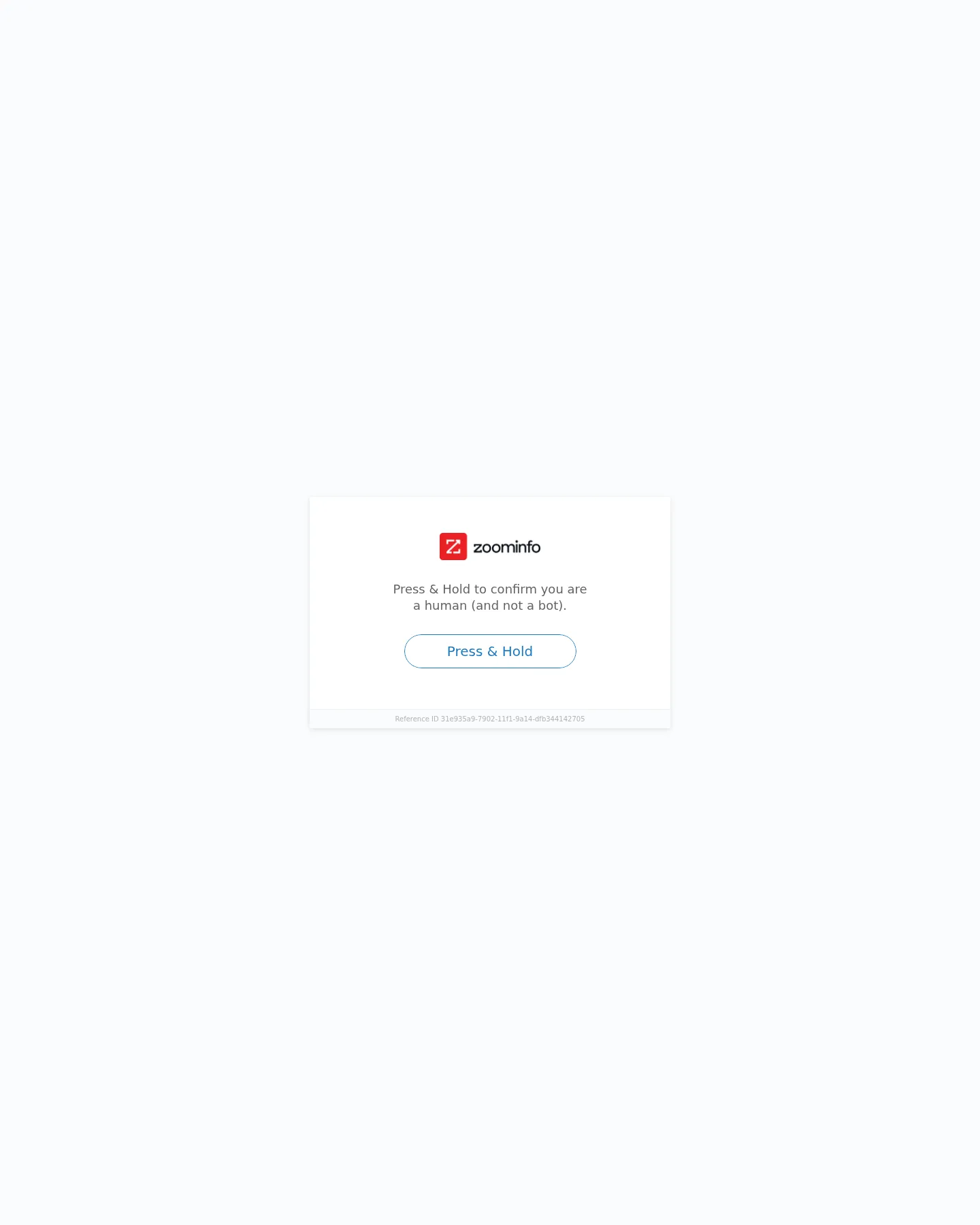
ZoomInfo uses a seat-plus-usage model that is fully gated — the company publishes no list prices, and its pricing page is served behind a HUMAN “Press & Hold” bot-verification wall (HTTP 403 to automated capture). What is structurally observable, rather than the dollar figures, breaks down along these dimensions:
- Package (which GTM function): ZoomInfo is sold by product line — Copilot (AI GTM assistant), Sales, Marketing, and Talent (recruiting) — each licensed separately. Exact prices: unknown / quote-only.
- Seats (per-user license): the platform is licensed per user within a package. Per-seat price: unknown / quote-only.
- Export credits (usage): exporting contact/company records draws down a shared annual credit pool; exhausting the pool (not the seats) is the common overage trigger. Credit allotments and top-up prices: unknown / quote-only.
- Annual commitment: deals are annual contracts negotiated by sales, with no self-serve checkout and no public free tier. This is a commitment-with-overage pattern, where the commit is seats + a credit allowance.
What makes this different: ZoomInfo pairs a classic per-seat SaaS license with a shared, exportable credit pool — so the value metric that actually caps usage is records exported, not seats — and then hides every number behind a sales-gated, bot-protected pricing page. See our usage-based pricing guide for how seat-plus-credit hybrids like this are constructed.
Pricing by product
All prices below are
unknownby design. ZoomInfo publishes no public list prices, andhttps://www.zoominfo.com/pricingreturned a HUMAN “Press & Hold” bot-verification page (HTTP 403) under both default and stealth capture on 2026-07-06. The rows record the packaging and metering structure, which is observable from ZoomInfo’s product taxonomy; the dollar figures are quote-only and must not be inferred.
ZoomInfo (GTM packages)
| Tier | Price | Included | Key mechanics |
|---|---|---|---|
| Copilot | Unknown (quote-only) | ZoomInfo Copilot AI GTM assistant over contact/company data + buyer intent | Per-seat license; export credits consumed on record pulls; AI-forward package |
| Sales | Unknown (quote-only) | Contact/company data, intent, and sales engagement/outreach tooling | Per-seat license; sales-led, annual contract |
| Marketing | Unknown (quote-only) | Targeting, enrichment, website-visitor and intent signals for demand gen | Per-seat / platform license; sales-led, annual contract |
| Talent | Unknown (quote-only) | Candidate contact data and recruiting-oriented search | Per-seat license; sales-led, annual contract |
Credit pool (usage dimension across packages)
| Dimension | Price | Included | Key mechanics |
|---|---|---|---|
| Export credits | Unknown (quote-only) | An annual credit allotment shared across seats | Debited per contact/company record exported; exhaustion is the main overage trigger |
| Additional credits | Unknown (quote-only) | Top-up credits or a higher-tier allotment | Purchased or negotiated when the annual pool runs out |
Sales motions across products: all packages (Copilot, Sales, Marketing, Talent) are sales-led and quote-only; there is no PLG / self-serve checkout and no public free tier.
Hidden costs : export credits and seat minimums drive the real bill
Because ZoomInfo publishes no prices, a precise bill cannot be constructed from public data. What is structurally clear is where the cost concentrates — and it is not only seats. The two archetypes below name the cost drivers; every dollar figure is unknown / quote-only.
Archetype 1 — a small sales team that exports heavily
| Line item | Monthly cost |
|---|---|
| Per-seat Sales/Copilot licenses | Unknown (quote-only) |
| Annual export-credit pool | Unknown (quote-only) |
| Additional credits after pool exhaustion | Unknown (quote-only) |
| Total | Unknown (quote-only) |
A team that pulls large lists into its CRM tends to exhaust its credit pool well before it needs more seats — so the overage line, not the seat line, is what moves the bill.
Archetype 2 — an enterprise adding Copilot + intent
| Line item | Monthly cost |
|---|---|
| Copilot seats (AI GTM assistant) | Unknown (quote-only) |
| Marketing package + intent signals | Unknown (quote-only) |
| Expanded annual credit commitment | Unknown (quote-only) |
| Total | Unknown (quote-only) |
Layering multiple GTM packages (Copilot + Marketing) plus a larger credit commitment is how enterprise ZoomInfo deals scale — each is separately negotiated, so the effective per-seat rate depends on the total annual commit.
The three cost traps buyers report
ZoomInfo publishes no numbers, so the figures below come from third-party estimates and buyer reports, not from ZoomInfo — they are directional and must not be read as ZoomInfo’s own prices. They are useful because they name where the surprises land:
- Credit-based export limits + overages. Buyer guides report annual bulk-export credit allotments (e.g., ~5,000/year on entry packages) with per-user monthly credits on higher tiers, and overage credits billed at roughly $0.50–$1.50 each once the pool is exhausted (an overage rate of ~$1.10/credit was reported on the Advanced plan by Cleanlist, 2026-03). Heavy list-pullers hit this ceiling first — the overage line, not the seat line, is what moves the bill.
- Annual-contract lock-in + auto-renewal. Multiple buyer resources (LeadGenius; Cleanlist, 2026) describe contracts that auto-renew unless cancelled 60–90 days before the renewal date, with reported renewal increases of 10–20%. A 2023 “Tell HN: Zoominfo Renewal Clause” post (5 points) echoes the same complaint about buried renewal terms. Miss the notice window and you are locked into another full year at a higher rate.
- Seat + credit stacking. Because seats and credits are metered independently, adding reps (reported at ~$2,500/user/yr in third-party estimates), intent data, and credit overages compound — buyer guides put real 5–10-rep deals in the $37,500–$100,000+/yr range once everything stacks. None of these figures are confirmable against ZoomInfo’s gated page; only a quote is authoritative.
Want to estimate your own ZoomInfo bill? A ZoomInfo pricing calculator can model your monthly cost from seats and export-credit volume once you have a quote — but note ZoomInfo’s numbers are gated, so any estimate is directional until sales confirms.
Pricing evolution : from data seats to an AI-Copilot-led, credit-metered platform
Cadence
| Quarter | Price changes | Product / SKU additions | Notes |
|---|---|---|---|
| 2021 Q3 | 0 (public) | 3 | Acquired Chorus.ai (~$575M, conversation intelligence), plus RingLead and Insent — added workflow on top of data. |
| 2024 Q1 | 0 (public) | 1 | ZoomInfo Copilot announced (2024-02-06); AI GTM assistant shipped as a new premium package, not a re-price. |
| 2025 Q2 | 0 (public) | 1 | Rebrand around GTM: NASDAQ ticker ZI → GTM (2025-05-12); GTM Studio launched for revenue ops. |
| 2025 Q4 | 0 (public) | 1 | Copilot Workspace (2025-10-06) — AI agents that execute GTM workflow, layered on the same seat + credit engine. |
| 2026 Q3 | 0 (public) | 0 | 2026-07-06 — live capture confirmed pricing remains gated: HUMAN “Press & Hold” wall, HTTP 403, no list prices. |
Tracked range: 2019–2026-07. Because ZoomInfo publishes no list prices, “price changes” here counts publicly observable list-price moves (none across the range); real per-account pricing changes at contract renewal and is not disclosed. The Wayback archive was unreachable in this environment, so historical entries are dated from company IR releases and press coverage rather than archived pricing screenshots.
Notable changes
- 2019-02 — DiscoverOrg + Zoom Information merge (~$800M reported) unified the two data vendors under the ZoomInfo brand — DiscoverOrg’s enterprise depth plus Zoom’s SMB breadth, sales-led from the start (source: Wikipedia; PortersFiveForce brief-history).
- 2020-06 — IPO on NASDAQ (ZI), reportedly ~$934M raised at ~$8B valuation; going public did not introduce a public rate card (source: press coverage).
- 2021-07 — Acquired Chorus.ai (~$575M) for conversation intelligence, plus RingLead and Insent, expanding from data into workflow — still packaged as seat + credit products (source: Boston Globe; ZoomInfo IR).
- 2024-02 — ZoomInfo Copilot announced (general release 2024-05-22): the AI GTM assistant arrived as a new premium package on top of the existing seat-plus-credit meter, the classic incumbent AI-monetization move (source: ZoomInfo IR).
- 2025-05-12 — Rebrand around GTM: NASDAQ ticker changed ZI → GTM and GTM Studio launched; the market identity shifted to “go-to-market platform” while pricing stayed gated (source: ZoomInfo IR; Yahoo Finance).
- 2025-10-06 — Copilot Workspace added AI agents that research accounts, draft outreach, and update CRM fields — deepening the AI layer without changing the underlying meter (source: ZoomInfo IR; MarTech Vibe).
- 2026-07-06 — Live capture of
zoominfo.com/pricingreturned a HUMAN bot-verification page (HTTP 403) under both default and stealth paths, confirming pricing is fully gated; no public list prices are available.
The 2025 biometric-tracking dispute in detail
On 2025-11-25 a security researcher published a report (via GitHub, “blackout-public”) alleging ZoomInfo’s website ran pre-consent biometric/behavioral tracking, and said ZoomInfo’s CEO blocked them after they documented it. The thread drew 123 points and 25 comments on Hacker News — a trust event well above the >50-point bar. It is not a pricing change, but it sharpens the transparency critique that already surrounds ZoomInfo’s gated, bot-walled pricing and data-collection practices, and it is the kind of reputational signal buyers weigh alongside the opaque quote process.
What’s unique : bot-walled, quote-only pricing on a seat-plus-credit data model
1. Pricing is not just gated — it is bot-protected. ZoomInfo goes beyond the usual “contact sales”: its pricing page is served behind a HUMAN “Press & Hold” challenge and returns HTTP 403 to automated fetchers. There are effectively no public list prices to read, which is unusual even among sales-led incumbents.
2. The value metric is exported records, not seats. ZoomInfo licenses per seat but meters usage through a shared annual credit pool consumed on each record export. Practically, teams hit the credit ceiling before the seat ceiling, so the credit pool is the true usage-based dimension — a classic credit-based billing design bolted onto per-seat SaaS.
3. AI arrived as a package, not a re-pricing. ZoomInfo added Copilot as another GTM product line (alongside Sales, Marketing, Talent) rather than re-architecting its meter. This is the incumbent pattern: monetize AI as a premium seat/package on top of the existing seat-plus-credit engine, rather than introducing outcome- or token-based AI pricing.
4. The “AI embedded, credit-metered data, opaque price” variant. Among Cohort-2 sales/GTM incumbents, ZoomInfo occupies a distinct corner. Transparent CRM peers like HubSpot publish per-seat list prices and bundle AI (Breeze) into published tiers, and Salesforce went a step further by publishing an explicit AI meter — Agentforce’s per-conversation rate. ZoomInfo does neither: AI (Copilot) is embedded into packages, the real usage dimension is a credit-metered data pool, and the price for all of it is fully gated. It is the opaque-price counterpoint to the transparent-AI-in-seats and published-AI-meter models its peers now use.
Strengths & weaknesses
| Strengths | Weaknesses |
|---|---|
| Large, mature B2B data asset with intent signals | Zero pricing transparency — no public list prices at all |
| Seat-plus-credit model aligns cost with export usage | Bot-walled pricing page (HTTP 403) frustrates evaluation and research |
| AI (Copilot) monetized cleanly as an add-on package | Sales-led, annual-commit only — no self-serve or free tier |
| Multiple GTM packages (Sales/Marketing/Talent) cross-sell well | Credit exhaustion creates surprise overage costs for heavy exporters |
| AI (Copilot Workspace) now runs execution agents, not just search | Auto-renewal (60–90-day notice) + reported 10–20% renewal hikes draw buyer ire |
Community signal (checked 2026-07). The loudest recent signal is a 123-point, 25-comment Hacker News thread (2025-11-25) alleging pre-consent biometric tracking on ZoomInfo’s site and that its CEO blocked the researcher — a trust event above the >50-point bar. Pricing-specific chatter is thinner but consistent: a 2023 “Tell HN: Zoominfo Renewal Clause” post (5 points) and recurring Reddit/G2 complaints (surfaced via buyer guides, since Reddit’s API was unreachable here) about aggressive auto-renewal, credit-overage surprises, and rising renewal quotes. No material pro-pricing community defense was found.
Billing UX : credit pools, seat licenses, and admin-managed allotments
Note: because the pricing page is bot-walled, the controls below are described from ZoomInfo’s documented seat-plus-credit model, not from a rendered pricing/billing screenshot. Exact limits and prices are unknown / quote-only.
- Credit pool — a shared annual allotment of export credits, debited each time a user exports a contact or company record; the primary usage dimension.
- Per-seat licenses — access is provisioned per user within each package (Copilot, Sales, Marketing, Talent); adding users adds seat cost.
- Package selection — GTM function (Copilot / Sales / Marketing / Talent) is chosen at contract time and gates which data and workflow features a seat can use.
- Annual contract + renewal — pricing is set per contract with no public rate card; changes happen at renewal, negotiated with sales.
Strategic wins : monetizing AI as a package on a proven meter
1. Bolting AI onto an existing meter instead of re-pricing
ZoomInfo shipped Copilot as a new GTM package rather than converting its whole business to token- or outcome-based AI pricing. This protects an installed base priced on seats and credits while still capturing AI upside — a lower-risk path than the AI-native re-pricing seen elsewhere in the pricing blueprint. See our analysis of the entitlement-to-credits billing shift for why incumbents favor this pattern.
2. Credit pool as the real value metric
By metering exported records through a credit pool, ZoomInfo ties cost to the action customers actually value (getting data into their CRM) rather than to logged-in seats. This is a durable usage-based pricing design that scales revenue with heavy users without punishing light ones on seat count.
3. Gating pricing to preserve negotiation leverage
Keeping all prices off the public web — and bot-walling the pricing page — preserves ZoomInfo’s ability to price-discriminate by account size and to anchor enterprise deals in a sales conversation. For a data business with wide willingness-to-pay variance, opacity is a deliberate revenue lever.
Areas to improve : transparency and credit-overage predictability
1. Zero pricing transparency raises evaluation friction
With no public prices and a bot-walled page, prospects can’t self-qualify, and third-party estimates fill the vacuum with unreliable numbers. Fix: publish at least indicative starting bands or a package-level “from” price, as competitors like Apollo.io do, to reduce top-of-funnel friction without abandoning sales-led enterprise deals.
2. Credit exhaustion creates surprise bills
Heavy exporters can burn through the annual credit pool mid-term and face overage or forced upgrades. Fix: expose real-time credit-burn forecasting and soft-cap alerts in-product so admins can see the overage coming — see our usage tracking guide for the instrumentation this needs.
3. AI value isn’t reflected in the metering
Copilot is sold as a premium package, but the underlying meter is still seats and export credits — the AI’s value (accounts surfaced, outreach drafted, next actions prioritized) isn’t captured in a usage or outcome dimension. Fix: pilot an AI-usage or outcome-linked component for Copilot so pricing tracks the assistant’s actual contribution, as covered in our outcome-based pricing analysis and the value-metric problem in AI pricing.
Monetization stack & signals : how ZoomInfo builds & buys its revenue engine
Buys 5 Builds 0 2 signal roles
ZoomInfo buys its entire quote-to-cash spine — Salesforce CPQ/Revenue Cloud, Thomson Reuters OneSource, and SAP S/4HANA — with no disclosed in-house billing engine. The tell worth watching is the FinOps director hire below, staffed to govern AI-inference cost and per-product margin separate from that vendor stack.
-
“Ensuring the quality, consistency and efficiency of all Salesforce activities including: general administration, data validity, reporting, support, maintenance, and improvement of the Salesforce platform”
-
“Lead integration architecture between OneSource TR and Salesforce CPQ/Revenue Cloud for real-time quote-time tax calculation”
-
“Lead integration architecture between OneSource TR and SAP S/4 HANA for actual tax posting”
-
“Own the product roadmap for OneSource TR, including configuration, enhancements, and integrations with SFDC and SAP”
-
“What Already Exists: The Senior Data Engineer will work within an established data stack that includes: Warehousing: Snowflake as the primary warehouse; BigQuery for GCP-native workloads”
-
“Credits are pooled across your team, not allocated per seat; each exported contact costs 1 credit.”
-
ZoomInfo's quote-to-cash spine bridges three bought systems — Salesforce CPQ/Revenue Cloud (quoting), Thomson Reuters OneSource (tax), and SAP S/4HANA (posting) — an integration-heavy stack rather than an in-house billing engine, consistent with its fully sales-led, gated pricing motion.
“You will own the end-to-end indirect tax technology ecosystem, serving as the product and solution leader for Thomson Reuters OneSource Tax (TR OneSource) and its integrations with Salesforce (SFDC) for quote-time tax determination and SAP S/4 HANA for actual tax posting”
-
A dedicated FinOps director scoped to AI-model consumption costs, multi-cloud (GCP/AWS) cost allocation, and per-product unit economics — not classic financial-systems/rev-rec — shows ZoomInfo staffing margin discipline around its AI (Copilot) inference spend, separate from its quote-to-cash stack.
“AI Economic Stewardship: Manage the financial impact of our AI roadmap. You will oversee current model consumption costs and build the fiscal framework for our transition into building and training custom models”
2 more matched roles — supporting evidence
- Senior Manager, Product Management RevOps Jul 6, 2026
- Senior Customer Lifecycle Strategy Manager Customer success Jul 6, 2026
Signals reviewed · derived from public job posts, product docs
Job postings fill and close over time — once a posting is filled we keep it as a dated citation (the quoted evidence remains); use View open roles for current listings.
Key takeaways
- Gating can be absolute. ZoomInfo shows that a mature data business can run with no public prices and even a bot-walled pricing page — viable when willingness-to-pay varies widely and every deal is sales-led.
- Pick the value metric that customers actually consume. ZoomInfo meters exported records via a credit pool, not seats, so revenue tracks the action buyers value most.
- Monetize AI as a package on your existing meter. Copilot rode on top of the seat-plus-credit engine rather than forcing a re-pricing — a low-risk incumbent playbook.
- Overage design is a satisfaction risk. Credit-pool exhaustion is where ZoomInfo customers feel cost pain; predictable burn-down UX matters as much as the headline rate.
- Opacity has a cost too. No public price means unreliable third-party estimates and higher evaluation friction — a trade-off, not a free win.
UBP implications
- Credit pools convert seat SaaS into usage-based pricing without abandoning seats. ZoomInfo’s shared export-credit pool is a template for adding a genuine usage dimension on top of per-seat licensing.
- AI can be a premium package rather than a new meter. Incumbents can capture AI value by selling it as another seat/package (Copilot) instead of migrating to token or outcome pricing.
- Transparency is a strategic variable, not a default. ZoomInfo demonstrates that for high-variance-willingness-to-pay data products, full pricing opacity can be a deliberate — if friction-heavy — monetization choice.
Sources
- ZoomInfo pricing page — bot-protected (HUMAN “Press & Hold”, HTTP 403); no readable list prices (accessed 2026-07-06)
- ZoomInfo product / GTM platform overview (accessed 2026-07-06)
- ZoomInfo Copilot product page — AI GTM assistant packaging (accessed 2026-07-06)
- ZoomInfo updates / release notes — product & SKU change log (accessed 2026-07-06)
- ZoomInfo Investor Relations news releases — dated Copilot (2024-02-06), GTM ticker change (2025-05-12), and Copilot Workspace (2025-10-06) announcements (accessed 2026-07-06)
Want to compare ZoomInfo against other sales-intelligence and GTM pricing? Browse the pricing blueprint.
Bottom line
ZoomInfo prices like an incumbent that has nothing to prove online: no list prices, a bot-walled pricing page, and every quote negotiated by sales around per-seat licenses plus a shared export-credit pool. Its AI story — ZoomInfo Copilot — arrives as another GTM package rather than a re-priced meter, and the number that actually caps a customer’s spend is records exported, not seats. Real figures are unknown by design; only a ZoomInfo quote reflects them.
Pricing timeline : Major events on a vertical axis
Each milestone below corresponds to a public pricing change, product launch, or material adjustment. Major events use a filled marker; minor adjustments use a faded one.
Pricing captured as gated / bot-protected
Live capture of zoominfo.com/pricing returned a HUMAN 'Press & Hold' bot-verification page (HTTP 403) under both default and stealth paths. No list prices are publicly visible; pricing is quote-only, packaged by GTM function (Copilot, Sales, Marketing, Talent) on a seat + export-credit model.
ZoomInfo Copilot Workspace — AI agents that execute GTM workflow
On 2025-10-06 ZoomInfo launched Copilot Workspace, adding AI agents that research accounts, draft follow-ups, update CRM fields, and surface next best actions in one workspace. Deepens the AI package layered on the existing seat + credit model; no public pricing disclosed. Source: ZoomInfo IR; MarTech Vibe.
Rebrand around GTM: NASDAQ ticker changes ZI → GTM; GTM Studio launches
After market close on 2025-05-12, ZoomInfo's NASDAQ ticker changed from ZI to GTM alongside the launch of GTM Studio (a revenue-ops play-orchestration command center). The company repositioned as a full go-to-market platform; pricing remained gated and quote-only. Source: ZoomInfo IR press release; Yahoo Finance.
ZoomInfo Copilot announced — AI GTM assistant on top of the data + credit model
ZoomInfo announced ZoomInfo Copilot on 2024-02-06 (general release 2024-05-22), its AI GTM assistant that surfaces accounts, drafts outreach, and prioritizes next actions over ZoomInfo's contact/company/intent data. AI arrived as a new premium package rather than a re-priced meter — the underlying seat + export-credit engine was unchanged. Source: ZoomInfo IR news releases. No public list prices.
Chorus.ai (conversation intelligence) acquired for ~$575M; RingLead + Insent added
ZoomInfo bought Chorus.ai (~$575M all-cash) to add conversation intelligence, plus RingLead (data orchestration) and Insent (chatbot) in 2021 — expanding the platform beyond data into workflow, still packaged as sales-led seat + credit products. Archive unreachable; dated from Boston Globe / Calcalist / ZoomInfo IR.
ZoomInfo IPO on NASDAQ (ZI); pricing stays fully gated
ZoomInfo Technologies IPO'd June 2020, reportedly raising ~$934M at an ~$8B valuation (ticker ZI). Going public did not change the sales-led, quote-only pricing posture — no public rate card was introduced. Archive unreachable; dated from press coverage.
DiscoverOrg + Zoom Information merge, unifying under the ZoomInfo brand
DiscoverOrg (founded 2007) acquired competitor Zoom Information, Inc. (~$800M reported) in Feb 2019 and adopted the ZoomInfo name — combining DiscoverOrg's enterprise data with Zoom's SMB reach into a single seat-plus-credit sales-intelligence platform. Archive unreachable in this environment; dated from press coverage (Wikipedia; PortersFiveForce brief-history). No list prices; sales-led from inception.
- · ZoomInfo publishes no list prices at all — the pricing page is served behind a HUMAN 'Press & Hold' bot wall, and even the marketing shell returns HTTP 403 to automated fetchers, so every quote is sales-gated.
- · Its pricing meters two axes at once: per-seat licenses for the platform plus a shared annual credit pool that is debited each time a user exports a contact/company record — running out of credits, not out of seats, is the usual overage trigger.
- · ZoomInfo renamed itself around its AI: the company's NASDAQ ticker changed from ZI to GTM in 2025, and its flagship AI feature is 'ZoomInfo Copilot', an AI GTM assistant layered on top of its contact-and-intent data.
Questions & answers
- How much does ZoomInfo cost?
- ZoomInfo does not publish list prices. Pricing is quote-only and sales-led, built from per-seat licenses for the chosen package (Copilot, Sales, Marketing, or Talent) plus an annual credit pool for record exports. You must contact ZoomInfo sales for a figure.
- Does ZoomInfo have a free plan?
- No. ZoomInfo has no self-serve free tier; access is via annual, quote-based contracts. It periodically offers a limited free trial, but ongoing use requires a paid, sales-negotiated agreement.
- What is the ZoomInfo credit system?
- ZoomInfo licenses are per-seat, but exporting contact or company records draws down a shared annual credit pool. When the pool is exhausted, additional credits (or a plan upgrade) are needed — credit consumption is the main usage-based dimension on top of seats.
- What is ZoomInfo Copilot?
- ZoomInfo Copilot is ZoomInfo's AI GTM assistant, layered on its contact, company, and buyer-intent data to surface accounts, draft outreach, and prioritize sellers' next actions. It is sold as its own package alongside the Sales, Marketing, and Talent product lines.
- Why can't I see ZoomInfo's prices online?
- ZoomInfo's pricing page is protected by a HUMAN 'Press & Hold' bot-verification wall and returns HTTP 403 to automated requests. Combined with a deliberate no-list-price policy, this means real numbers are only available through a sales conversation.